
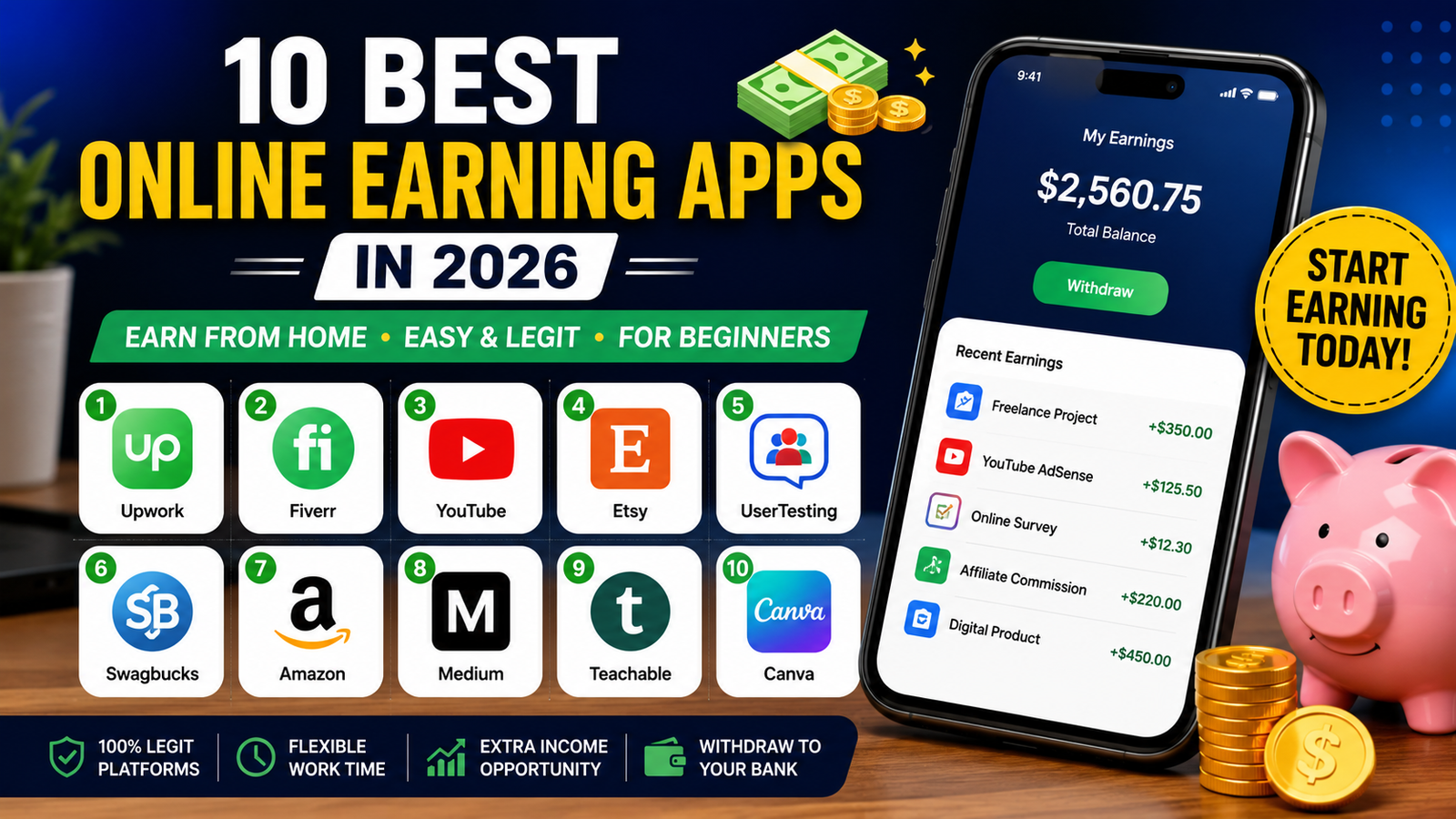
The internet has created many new ways for people to develop skills, offer services, sell products, create content, and earn money online. In 2026, beginners have more choices than ever, but finding the right platform can be confusing. Some apps focus on freelancing, while others are better for content creation, selling products, completing research tasks, or building a long-term online business.
The 10 Best Online Earning Apps in 2026 are not necessarily the apps that promise the fastest money. A better choice is a platform that matches your skills, interests, location, and available time. Most legitimate online earning opportunities require patience and consistent effort rather than promising guaranteed income.
This guide explains ten popular platforms and how beginners can think about using them responsibly.
1. Upwork
Upwork is one of the best-known freelancing platforms for people who want to earn by providing professional services online. Freelancers can create profiles, search for projects, send proposals, complete contracts, and receive payments through the platform. Upwork says freelancers can offer skills such as writing, design, development, marketing, customer support, and many other professional services.
For beginners, the most important step is choosing one skill instead of trying to offer everything. For example, someone who enjoys writing could focus on blog writing, while a designer could focus on social media graphics.
Competition can be strong, so building a good profile and portfolio is important. Upwork also charges freelancer fees and generally requires Connects for submitting proposals to many jobs.
Important: Upwork has eligibility requirements, so check its current rules before creating an account.
2. Fiverr
Fiverr is another major freelancing marketplace where people offer services through listings called Gigs. Services can include writing, graphic design, video editing, website development, translation, voice work, and digital marketing.
Fiverr explains that a Gig works like a storefront where a freelancer describes the service, pricing, packages, requirements, and examples of their work.
Beginners can start by choosing one specific service and creating a clear offer. Instead of writing a broad title such as “I will do anything related to marketing,” a more specific service is easier for potential customers to understand.
Fiverr’s current policy says users generally need to be at least 18, while users aged 13–17 may use the platform only through an account owned by a parent or legal guardian with appropriate permission.
3. YouTube
YouTube can be an earning platform for people who enjoy creating videos. Beginners can build channels around educational content, tutorials, entertainment, technology, gaming, cooking, reviews, or other topics they genuinely understand.
Making money on YouTube usually takes time. A new creator needs to build an audience and follow YouTube’s monetization requirements before qualifying for applicable revenue programs.
The biggest advantage is that a useful video can continue attracting viewers long after it is published. However, creators should focus on original content instead of copying videos, images, or other people’s work.
For beginners, consistency is often more important than buying expensive equipment. A smartphone, good lighting, clear audio, and useful ideas can be enough to start learning.
4. Etsy
Etsy is a marketplace where sellers can offer handmade items, creative products, vintage items, and certain digital products. It can be particularly interesting for people who enjoy design, crafts, illustration, templates, or other creative work.
A beginner could develop printable designs, artwork, planners, invitations, or other permitted products and create an online shop.
However, selling online is a real business activity. Sellers need to consider product quality, customer service, fees, taxes, copyright, delivery, and marketplace policies.
The key lesson is to create something useful rather than simply uploading many low-quality products.
5. UserTesting
UserTesting connects companies with people who provide feedback about websites, apps, and digital experiences. Participants may be invited to complete specific tests and share their opinions about how a product works.
This type of platform can be useful for people who enjoy exploring websites and explaining what they find easy or confusing.
However, opportunities are not guaranteed every day. Eligibility, available tests, location, and demographic requirements can affect how many opportunities someone receives.
Beginners should treat user testing as an occasional earning opportunity rather than assuming it will provide a fixed monthly income.
6. Swagbucks
Swagbucks is a rewards platform that offers activities such as surveys, online offers, and other eligible tasks. Users collect points through qualifying activities and may be able to redeem rewards depending on their location and the platform’s current rules.
Rewards platforms can be easier to understand than freelancing because users do not necessarily need a professional skill. However, the earning potential is generally different from professional freelancing, and available activities can vary by country.
Before spending significant time on any rewards app, beginners should check its current terms, eligibility requirements, and available redemption methods.
7. Amazon
Amazon provides several ways for people and businesses to participate in online commerce. Depending on eligibility and location, opportunities can include selling products or using other Amazon programs.
Selling products online requires more planning than simply downloading an app. Sellers need to research products, understand marketplace policies, manage customer expectations, and keep track of costs.
For beginners, it is better to learn the business model carefully before spending money on inventory or advertising. Never believe claims that an online marketplace guarantees quick or effortless profits.
8. Medium
Medium is a publishing platform for writers who want to share articles and build an audience. People interested in technology, education, personal development, business, travel, or other subjects can use writing platforms to develop their publishing skills.
Earning potential depends on the platform’s current programs, eligibility, readership, and other factors. It should not be treated as guaranteed income.
For beginners, the biggest benefit can be developing writing skills. Publishing useful, original articles regularly can also help create a portfolio that may support future freelance opportunities.
9. Teachable
Teachable is a platform used by creators and educators to build and sell online courses and digital learning products. It can be useful for people who already have knowledge in a subject and can explain it clearly.
For example, someone with strong knowledge of a software program might create educational lessons for beginners. However, creating a successful course requires research, planning, recording, editing, marketing, and customer support.
This is therefore better considered a long-term online business model rather than a quick-money app.
10. Canva
Canva is primarily a design platform rather than a traditional earning app, but it can help beginners develop and sell creative skills. Users can create social media graphics, presentations, posters, thumbnails, documents, and other visual content.
A beginner interested in graphic design can use Canva to practice creating designs and build a portfolio. Those skills can later be used for legitimate freelance services or personal projects.
Users should always follow Canva’s licensing rules and make sure they have the appropriate rights to any content they use commercially.
How to Choose the Best Online Earning App
The best platform depends on your situation. If you already have a professional skill, freelancing platforms such as Upwork or Fiverr may be more relevant. If you enjoy creating videos, YouTube may be a better long-term option. Writers can explore publishing platforms, while creative sellers may prefer marketplaces such as Etsy.
Before choosing an app, ask yourself three simple questions:
What can I do well?
Identify a skill or interest that you can develop.
How much time can I give it?
Online income usually requires consistent effort.
What are the platform’s rules?
Always check age, location, payment, verification, and eligibility requirements before signing up.
Tips for Beginners Earning Online
Do not trust websites that promise guaranteed income with almost no effort. Legitimate online work usually requires time, skills, creativity, or useful contributions.
Start with one platform rather than creating accounts everywhere. Learn how it works, improve your skills, and track your progress.
Never pay someone who promises a guaranteed job. Be careful with requests for passwords, verification codes, unnecessary personal information, or unusual payments.
Also remember that online income may have tax and legal responsibilities depending on your country. Keep records of legitimate earnings and expenses and follow applicable local rules.
Are Online Earning Apps Really Worth It in 2026?
Yes, legitimate platforms can provide useful opportunities, but they are not magic money-making machines. The amount someone can earn depends on skills, experience, demand, location, platform rules, available opportunities, and the amount of work completed.
For beginners, the best approach is to focus on learning a valuable skill and using online platforms as a way to practice, build experience, and eventually find legitimate customers or audiences.
See Also:Best App to Get Car Insurance Online in 2026
FAQs
What are the best online earning apps in 2026?
The best choice depends on your skills and goals. Upwork and Fiverr are focused on freelancing, YouTube is useful for video creators, Etsy is designed for selling eligible products, and platforms such as UserTesting and Swagbucks focus on different types of online activities.
Can beginners earn money online without experience?
Yes, beginners can start learning and developing skills online, but earning money is not guaranteed. Starting with a simple skill, building examples of your work, and gaining experience can improve your chances.
Which online earning app is best for freelancing?
Upwork and Fiverr are two well-known freelancing platforms. However, competition and eligibility requirements vary, so beginners should research the current rules before choosing one.
Can I earn money from my phone?
Some platforms allow users to perform activities through smartphones, while others work better on computers. The type of work matters more than the device. Freelancing, content creation, research tasks, and online selling all have different requirements.
Are online earning apps safe?
Some are legitimate, but not every earning app is trustworthy. Use official websites or app stores, read the current terms, protect your personal information, and avoid platforms promising unrealistic guaranteed profits.
Is online earning easy for beginners?
Online earning is possible, but it is usually not easy or instant. Beginners often need to learn skills, create a portfolio, build trust, and remain consistent before seeing meaningful results.
Final Thoughts
The 10 Best Online Earning Apps in 2026 offer different opportunities for beginners, from freelancing and content creation to online selling, writing, testing, and digital education. There is no single app that is perfect for everyone.
The smartest strategy is to choose one legitimate platform that matches your interests, understand its rules, and focus on building a useful skill. Avoid unrealistic promises and never risk your personal information or money simply because an app claims you can get rich quickly.
With patience, learning, and responsible use of online platforms, beginners can develop valuable digital skills and explore legitimate ways to earn online in 2026.