


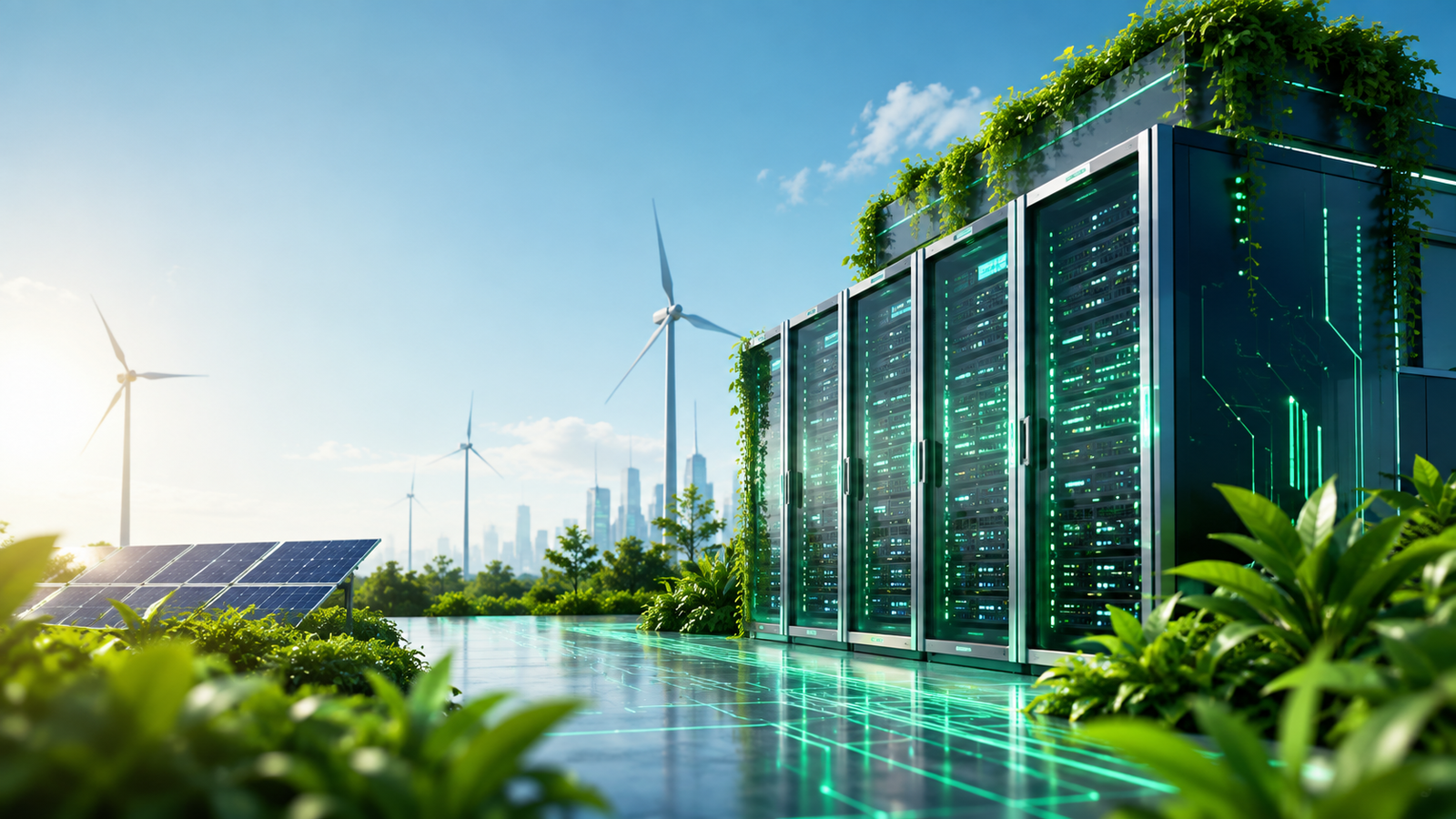
Green Computing is becoming increasingly important as the world depends more heavily on computers, smartphones, cloud platforms, data centers, artificial intelligence, and other digital technologies. While technology has made communication, business, education, healthcare, and entertainment easier, it also consumes significant amounts of electricity and creates electronic waste. Green Computing offers a way to reduce the environmental impact of digital technology while maintaining performance, efficiency, and innovation.
In simple terms, Green Computing means designing, using, and managing computers and other technology in ways that reduce energy consumption, minimize waste, and protect the environment. It includes energy-efficient hardware, responsible software development, renewable energy, efficient data centers, device recycling, and sustainable technology practices.
As we move through 2026, Green Computing is no longer just an environmental concept. It is becoming an important part of modern technology strategies for individuals, businesses, governments, and technology companies.
What Is Green Computing?
Green Computing, also called green IT or sustainable computing, focuses on reducing the environmental impact of information technology. The goal is to make digital systems more energy-efficient and environmentally responsible throughout their life cycle.
This approach covers everything from manufacturing computer components to using devices and eventually recycling or safely disposing of them. A sustainable computing strategy considers energy efficiency, resource consumption, electronic waste, hardware durability, and responsible disposal.
For example, using an energy-efficient laptop instead of an older power-hungry computer can reduce electricity consumption. Similarly, companies can reduce their environmental footprint by optimizing servers, using efficient cooling systems, and powering data centers with renewable energy.
Why Is Green Computing Important?
The rapid growth of digital technology has increased the demand for electricity and electronic equipment. Data centers, networks, personal computers, smartphones, and other connected devices require energy to operate.
One of the biggest challenges is the increasing amount of electronic waste. Old phones, computers, monitors, batteries, and other electronic products can become waste when they are replaced. Recycling and responsible disposal can help recover valuable materials and reduce environmental harm.
Green Computing addresses these challenges by encouraging more efficient technology use.
The major benefits include:
- Lower energy consumption
- Reduced operating costs
- Less electronic waste
- Better use of natural resources
- Longer hardware life
- More efficient data centers
- Support for renewable energy
- Reduced environmental impact
- Sustainable business operations
Green Computing can therefore benefit both the environment and organizations looking for efficient ways to manage technology costs.
How Does Green Computing Work?
Green Computing uses several strategies to make technology more sustainable. These strategies can be applied at different stages of the technology life cycle.
1. Energy-Efficient Hardware
Modern computers and electronic devices can be designed to perform efficiently while consuming less power. Energy-efficient processors, displays, storage systems, and power supplies can help reduce electricity use.
Users can also improve efficiency by choosing devices that meet recognized energy-efficiency standards and by replacing outdated equipment when newer technology provides significantly better efficiency.
However, replacing devices too frequently can also create unnecessary electronic waste. A balanced approach is to use hardware for as long as it remains practical and maintainable.
2. Sustainable Data Centers
Data centers are an important part of the digital economy. They host websites, applications, cloud services, databases, streaming platforms, and many other online services.
Because data centers contain large numbers of servers, they require substantial amounts of electricity. They also need cooling systems to prevent equipment from overheating.
Green data centers focus on improving server utilization, optimizing cooling, reducing unnecessary computing workloads, and using energy from renewable sources where practical.
Virtualization can also help. Instead of dedicating one physical server to a single workload, multiple virtual machines can operate on fewer physical servers. This can improve hardware utilization and potentially reduce energy consumption.
3. Cloud Computing Efficiency
Cloud computing allows organizations to access computing resources without maintaining all of their own physical infrastructure. When managed efficiently, cloud environments can improve resource utilization.
Cloud providers can optimize server capacity, cooling, storage, and networking across large facilities. Organizations can also reduce unnecessary resource consumption by shutting down unused virtual machines, selecting appropriate computing capacity, and optimizing applications.
Green Computing and cloud computing therefore have an important relationship. Efficient cloud usage can help organizations avoid wasting computing resources.
4. Renewable Energy
Renewable energy is another major component of sustainable technology. Solar, wind, hydroelectric, and other renewable sources can provide electricity without relying entirely on fossil fuels.
Technology companies and data center operators can support sustainability by increasing their use of renewable energy and improving energy management.
For businesses, renewable energy can become part of a broader environmental strategy that includes efficient hardware, optimized software, sustainable buildings, and responsible waste management.
Green Software Development
Green Computing is not limited to hardware. Software also influences how much computing power a device requires.
Poorly optimized applications can consume unnecessary processor resources, memory, storage, and network bandwidth. Efficient software can perform the same task while using fewer resources.
Green software development focuses on writing applications that use computing resources efficiently. Developers can improve performance by optimizing algorithms, reducing unnecessary background processes, minimizing data transfers, and improving application architecture.
For example, an application that performs unnecessary calculations continuously can increase CPU usage and battery consumption. Optimizing the application can reduce these demands and improve the user experience at the same time.
Green Computing and Artificial Intelligence
Artificial intelligence is one of the most important technology developments of recent years, but AI systems can require significant computing resources, particularly during model training and large-scale deployment.
Green Computing can help make AI more sustainable through efficient algorithms, optimized hardware, model compression, better resource management, and improved data center efficiency.
Instead of using the largest possible model for every task, developers can choose an appropriately sized model based on the application’s requirements. Efficient AI systems can potentially provide useful results while requiring fewer computing resources.
As AI adoption continues, energy efficiency will become an increasingly important consideration in responsible technology development.
Electronic Waste and Green Computing
Electronic waste is one of the major challenges associated with modern technology. Devices eventually become obsolete, damaged, or unwanted, creating a growing stream of discarded electronics.
Green Computing encourages responsible management of electronic products. Instead of throwing old equipment into ordinary waste, consumers and organizations should consider reuse, refurbishment, trade-in programs, donation, or certified recycling where available.
Businesses can also establish hardware life-cycle policies. Equipment that is no longer suitable for demanding tasks may still be useful for less intensive work.
Extending the useful life of devices can reduce the need for manufacturing new equipment and can help conserve materials.
Benefits of Green Computing for Businesses
Green Computing can provide several practical advantages to businesses.
First, energy efficiency can reduce electricity expenses. Large organizations operating many computers, servers, and networking devices may benefit significantly from lower energy consumption.
Second, efficient technology can improve resource utilization. Businesses can avoid paying for computing capacity they do not actually need.
Third, sustainable practices can support corporate environmental goals. Customers, employees, investors, and other stakeholders increasingly pay attention to how organizations address environmental responsibility.
Fourth, Green Computing can encourage better technology management. Regularly reviewing hardware, software, storage, and cloud resources can identify unnecessary consumption and reduce waste.
Benefits for Individuals
Green Computing is not only for large companies. Individual users can also adopt simple sustainable technology habits.
Users can reduce unnecessary energy consumption by turning off devices when they are not needed, using sleep modes, adjusting power settings, and avoiding unnecessary background applications.
Keeping devices for longer periods can also reduce electronic waste. When a device is no longer needed, users can look for responsible reuse or recycling options rather than simply throwing it away.
Choosing energy-efficient devices and avoiding unnecessary upgrades can also support more sustainable technology consumption.
Green Computing in Education
Schools, colleges, and universities use large numbers of computers and digital devices. Green Computing can help educational institutions reduce energy consumption and technology waste.
Institutions can use energy-efficient computers, centralized management systems, virtualized infrastructure, and responsible recycling programs.
Students can also learn about sustainable technology and understand how their digital activities affect energy consumption and electronic waste.
Teaching Green Computing can prepare students for careers in technology while encouraging environmental responsibility.
Challenges of Green Computing
Although Green Computing provides many advantages, implementing it can be challenging.
One major challenge is the initial cost of upgrading old infrastructure. Energy-efficient equipment, renewable energy systems, and modern data center technologies may require significant investment.
Another challenge is balancing performance with efficiency. Some demanding applications require powerful hardware, and reducing resources too aggressively can negatively affect performance.
Electronic waste recycling is another complex issue because devices contain different materials and components. Proper recycling requires suitable facilities and responsible processes.
There is also a need for better awareness. Individuals and organizations may not understand how much energy their digital infrastructure consumes or how simple changes could improve efficiency.
Future of Green Computing
The future of Green Computing is closely connected with the broader development of sustainable technology. As digital services continue expanding, organizations will have more reasons to improve computing efficiency.
Future developments may include more energy-efficient processors, advanced cooling technologies, smarter data centers, renewable-powered infrastructure, efficient AI systems, and software designed with resource consumption in mind.
Edge computing may also contribute to efficiency in certain applications by processing data closer to where it is generated. This can reduce the amount of information that needs to travel to centralized systems, although the environmental benefits depend on how the infrastructure is designed and powered.
The growth of smart buildings, Internet of Things devices, electric vehicles, and connected systems will also create new opportunities for sustainable computing.
How to Adopt Green Computing Practices
Individuals and businesses can begin with simple steps:
- Use energy-efficient hardware.
- Enable power-saving features.
- Turn off unnecessary devices.
- Keep computers and smartphones for a reasonable useful life.
- Reuse or refurbish older equipment.
- Recycle electronic waste responsibly.
- Remove unnecessary software and background processes.
- Optimize cloud resources.
- Improve server utilization.
- Consider renewable energy where practical.
- Encourage employees to follow sustainable technology policies.
- Choose software that uses computing resources efficiently.
These practices may seem small individually, but they can make a meaningful difference when adopted across organizations and communities.
Green Computing and Sustainable Digital Transformation
Digital transformation has become a priority for many organizations. Businesses are moving from traditional systems to cloud platforms, automation, artificial intelligence, data analytics, and connected technologies.
Sustainability should be considered during this transformation. Organizations can evaluate not only whether a technology improves productivity but also how efficiently it uses energy and resources.
For example, moving an inefficient application to the cloud does not automatically make it sustainable. Companies should also optimize workloads, remove unused resources, manage storage efficiently, and monitor infrastructure performance.
This approach connects digital innovation with environmental responsibility.
See Also : Best App to Get Car Insurance Online in 2026
FAQs
What is Green Computing?
Green Computing is the practice of designing, using, and managing computer technology in ways that reduce energy consumption, electronic waste, and environmental impact.
Why is Green Computing important?
Green Computing is important because modern digital technology consumes energy and produces electronic waste. Sustainable computing practices can help reduce resource consumption while maintaining useful technology services.
What are examples of Green Computing?
Examples include energy-efficient hardware, sustainable data centers, renewable energy, server virtualization, efficient software, responsible device recycling, and optimized cloud computing.
How can businesses use Green Computing?
Businesses can use energy-efficient equipment, optimize cloud and server resources, improve data center efficiency, use renewable energy where practical, and establish responsible hardware recycling policies.
Can individuals practice Green Computing?
Yes. Individuals can use power-saving settings, turn off unnecessary devices, extend hardware life, avoid unnecessary upgrades, and recycle unwanted electronics responsibly.
Is Green Computing related to AI?
Yes. AI systems can require significant computing resources, so efficient algorithms, optimized hardware, and better resource management can support more sustainable AI development.
What is the future of Green Computing?
The future is likely to include more efficient processors, sustainable data centers, renewable-powered infrastructure, efficient AI, optimized software, and smarter resource management.
Conclusion
Green Computing is an important part of building a more sustainable digital future. As technology continues to influence almost every area of modern life, reducing its environmental impact will become increasingly important.
From energy-efficient computers and sustainable data centers to optimized software, renewable energy, responsible recycling, and efficient artificial intelligence, Green Computing covers a wide range of practices.
Businesses can use it to reduce costs and improve resource efficiency, while individuals can contribute by using devices responsibly and reducing electronic waste. Developers can create more efficient software, and technology providers can invest in sustainable infrastructure.
In 2026 and beyond, the goal should not simply be to create more powerful technology. It should also be to create technology that uses resources intelligently and supports a healthier environment.
Green Computing provides a practical path toward that goal by combining technological innovation with energy efficiency, responsible resource management, and environmental awareness. As the digital world continues to grow, sustainable computing can help ensure that technological progress and environmental responsibility move forward together.