


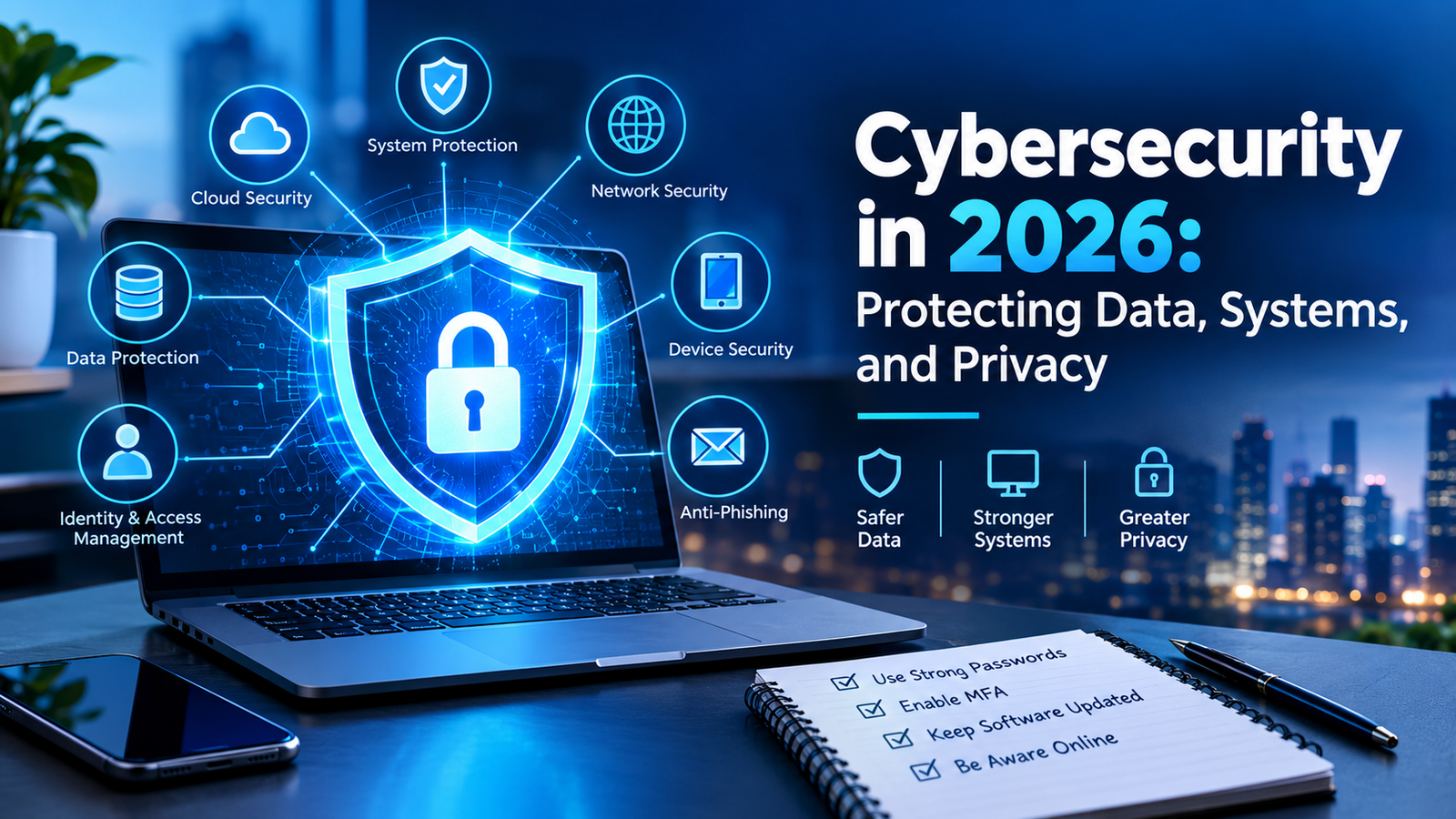
Cybersecurity has become one of the most important parts of modern digital life. In 2026, people use smartphones, computers, cloud services, online banking, social media, shopping platforms, and digital applications every day. While technology makes life easier and faster, it also creates new security risks. Cybercriminals continuously develop new methods to steal information, attack systems, spread malicious software, and trick users into revealing sensitive details.
Cybersecurity is the practice of protecting computers, networks, applications, devices, and digital information from unauthorized access, damage, theft, and disruption. It is not only important for large companies and governments. Individuals, students, small businesses, website owners, and online users also need basic cybersecurity knowledge to protect themselves.
The importance of cybersecurity continues to grow because personal and business information has become extremely valuable. Passwords, financial information, emails, photographs, customer records, business documents, and other private data can all become targets for attackers. A strong cybersecurity strategy helps reduce these risks and allows people and organizations to use technology more safely.
What Is Cybersecurity?
Cybersecurity refers to the technologies, practices, and processes used to protect digital systems and information. Its main purpose is to prevent unauthorized access and protect data from being stolen, changed, destroyed, or exposed.
Cybersecurity covers several areas, including network security, application security, cloud security, data protection, device security, identity management, and privacy. A complete cybersecurity approach combines technology with responsible user behavior.
For example, using a strong password is a simple cybersecurity practice. Enabling two-factor authentication, keeping software updated, avoiding suspicious links, and backing up important files are also essential security measures.
Why Cybersecurity Is Important in 2026
The digital world is expanding rapidly, and people are storing more information online than ever before. Businesses depend on digital systems for communication, payments, customer management, marketing, and daily operations. This increased dependence makes cybersecurity extremely important.
One major reason cybersecurity matters is the increasing number of online threats. Attackers may target individuals through phishing emails, fake websites, malicious applications, or social engineering. Businesses can face ransomware, data breaches, account compromises, and other attacks.
A cybersecurity incident can cause financial losses, privacy problems, reputational damage, and operational disruption. For businesses, even a short period of downtime can affect customers and revenue.
Strong cybersecurity helps organizations protect their information while maintaining customer trust. For individuals, it can help prevent unauthorized access to personal accounts and reduce the chances of identity theft and other online problems.
Common Cybersecurity Threats
Understanding common threats is the first step toward better protection. Cyber threats change over time, but several attack methods remain common.
Phishing
Phishing is a technique in which attackers create deceptive emails, messages, or websites designed to convince users to provide sensitive information. A message may appear to come from a familiar company or service.
Users should carefully check unexpected messages, avoid clicking suspicious links, and verify requests through official channels.
Malware
Malware is malicious software designed to interfere with devices or steal information. Different types of malware can perform different functions, including damaging files, collecting information, or providing unauthorized access.
Keeping operating systems, browsers, and security software updated can reduce exposure to known vulnerabilities.
Ransomware
Ransomware is a type of malicious software that can prevent access to files or systems. Attackers may demand payment in exchange for restoring access.
Regular backups, security updates, strong access controls, and employee awareness can help organizations reduce ransomware risks.
Password Attacks
Weak or reused passwords can make online accounts easier to compromise. Using unique passwords for important accounts is an essential security practice.
A password manager can help users create and manage strong, unique passwords without having to remember every password manually.
Social Engineering
Social engineering attacks target human behavior rather than only technical weaknesses. Attackers may use deception, urgency, impersonation, or manipulation to persuade someone to share information or perform an unsafe action.
Education and awareness are therefore important parts of cybersecurity.
Protecting Personal Data Online
Personal data includes information such as names, email addresses, account details, photographs, documents, and other information connected to an individual. Protecting this information should be a priority.
One of the easiest ways to improve data protection is to limit the amount of personal information shared online. Users should review privacy settings on social networks and online services and avoid publicly sharing sensitive information.
It is also important to download applications only from trusted sources and review application permissions. If an application requests access that does not appear necessary for its purpose, users should consider whether that permission is appropriate.
Important documents should also be stored securely. Backups can provide an additional layer of protection if a device becomes unavailable or files are accidentally deleted.
Strong Passwords and Multi-Factor Authentication
Passwords remain an important part of online security. A strong password should be difficult to guess and should not be reused across multiple important accounts.
Instead of using simple personal information, users should choose longer and unique passwords or passphrases. A password manager can make this easier.
Multi-factor authentication, often called MFA, provides another layer of security. Instead of relying only on a password, MFA requires an additional verification method. This can make it much more difficult for an attacker to access an account even if the password becomes known.
Users should enable MFA whenever it is available, particularly for email, financial, social media, cloud storage, and administrator accounts.
Keeping Software and Devices Updated
Software updates are not only about adding new features. They often include security fixes that address vulnerabilities discovered by developers and security researchers.
Users should keep operating systems, web browsers, applications, routers, and other connected devices updated. Automatic updates can be useful because they reduce the chance of forgetting important security patches.
Old software that is no longer supported can present additional security risks. Whenever possible, users should use supported versions and replace devices that can no longer receive important security updates.
Cybersecurity for Businesses
Businesses of every size need cybersecurity. Small businesses can sometimes become attractive targets because they may have valuable information but fewer security resources.
A business cybersecurity plan should include strong passwords, MFA, regular software updates, employee training, secure backups, access controls, and an incident response plan.
Employees should understand how to identify suspicious emails, unexpected attachments, unusual login requests, and social engineering attempts. Regular training can reduce mistakes that could otherwise create security problems.
Businesses should also follow the principle of least privilege. This means employees should receive only the access they need to perform their jobs. Limiting unnecessary access can reduce the potential impact of compromised accounts.
Cloud Security and Cybersecurity
Cloud services have become an important part of modern computing. Businesses and individuals use cloud platforms for storage, collaboration, applications, and backups.
However, moving information to the cloud does not automatically make it secure. Users and organizations still need to configure accounts properly, protect credentials, manage permissions, and monitor access.
Strong authentication and careful permission management are especially important for cloud accounts. Sensitive files should only be shared with people who genuinely need access.
The Role of Artificial Intelligence in Cybersecurity
Artificial intelligence is becoming increasingly important in cybersecurity. Security systems can use AI-based technologies to analyze large amounts of information, identify unusual activity, and help security teams respond to potential threats.
At the same time, attackers can also use advanced technologies to create more convincing scams and automate certain malicious activities. This creates a continuing competition between defenders and attackers.
As technology develops, cybersecurity will increasingly depend on a combination of automated security tools, human expertise, good policies, and user awareness.
How to Improve Your Cybersecurity
Improving cybersecurity does not always require complicated technical knowledge. Users can begin with several simple steps.
First, use unique and strong passwords for important accounts. Second, enable multi-factor authentication whenever possible. Third, keep devices and applications updated. Fourth, be careful with unexpected emails, messages, attachments, and links.
Users should also regularly review account activity and security settings. Important files should be backed up, and sensitive information should not be unnecessarily shared online.
Another important step is learning about new cybersecurity threats. Cybersecurity is not a one-time task. Online risks continue to change, so security habits should change as well.
Future of Cybersecurity
The future of cybersecurity will likely involve more automation, stronger identity protection, advanced threat detection, and increased attention to privacy. As more devices become connected and organizations rely heavily on digital infrastructure, protecting these systems will become even more important.
Businesses may increasingly adopt zero-trust security principles, stronger authentication methods, automated monitoring, and improved security awareness programs.
For individuals, cybersecurity will remain closely connected to everyday activities such as online shopping, banking, communication, education, and entertainment.
The most effective approach will combine technology with responsible behavior. Even advanced security systems can be weakened when users ignore warnings, reuse passwords, or share sensitive information carelessly.
Conclusion
Cybersecurity in 2026 is essential for protecting data, systems, accounts, and online privacy. Cyber threats can affect anyone, from individual users to large organizations. Phishing, malware, ransomware, weak passwords, and social engineering remain important risks.
Fortunately, many effective security practices are simple. Using strong and unique passwords, enabling multi-factor authentication, updating software, protecting personal information, backing up important files, and learning how to recognize suspicious activity can significantly improve digital security.
As technology continues to evolve, cybersecurity will become an even more important part of everyday life. By developing good security habits and staying informed about emerging threats, individuals and organizations can better protect their digital information and use modern technology with greater confidence.
See Also : Best App to Get Car Insurance Online in 2026
FAQs
1. What is cybersecurity?
Cybersecurity is the practice of protecting computers, networks, applications, devices, and digital information from unauthorized access, attacks, theft, damage, and disruption.
2. Why is cybersecurity important in 2026?
Cybersecurity is important because individuals and organizations increasingly depend on digital systems. Protecting online accounts, personal information, business data, and connected devices helps reduce security and privacy risks.
3. What are the most common cybersecurity threats?
Common cybersecurity threats include phishing, malware, ransomware, password attacks, social engineering, account compromise, and data breaches.
4. How can I protect my personal information online?
Use strong unique passwords, enable multi-factor authentication, keep software updated, review privacy settings, avoid suspicious links, and share sensitive information only when necessary.
5. Is a strong password enough to protect an account?
A strong password is important, but it should not be the only security measure. Multi-factor authentication adds another layer of protection and is recommended whenever available.
6. What is multi-factor authentication?
Multi-factor authentication requires more than one method of verifying a user’s identity. For example, an account may require a password plus another verification method.
7. How can businesses improve cybersecurity?
Businesses can improve security by using MFA, strong access controls, regular backups, software updates, employee training, security monitoring, and an incident response plan.
8. Can artificial intelligence improve cybersecurity?
Yes. AI-based security technologies can help analyze large amounts of information, detect unusual activity, and assist security teams in identifying potential threats.
9. Should I update my software regularly?
Yes. Software updates often contain security fixes that address vulnerabilities. Keeping operating systems and applications updated is an important cybersecurity practice.
10. What is the future of cybersecurity?
The future of cybersecurity will likely include more automation, advanced threat detection, stronger identity protection, improved privacy controls, and greater use of AI-assisted security technologies.