

Complete Guide t
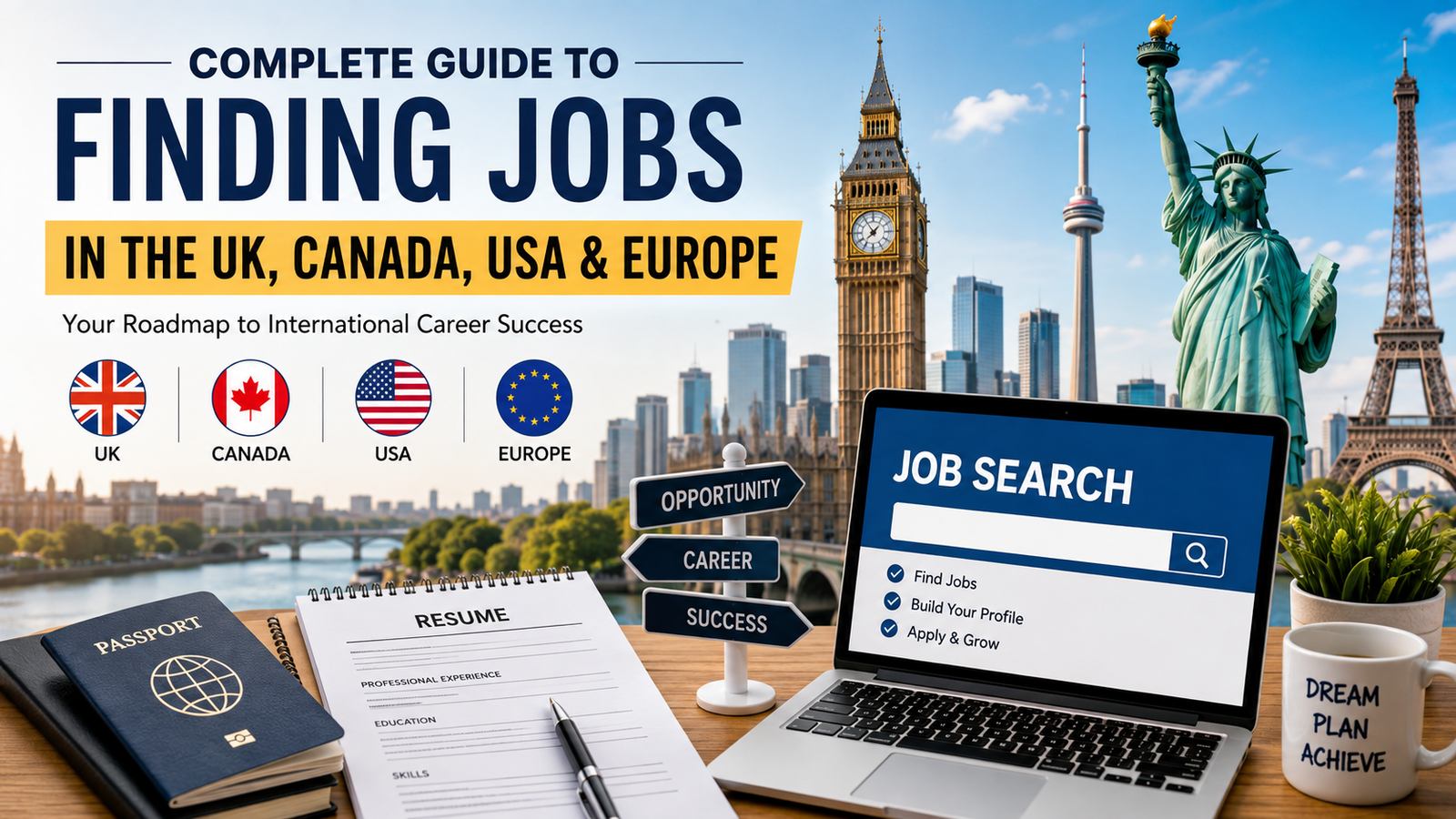
Finding Jobs in another country can be an exciting opportunity for people who want to build an international career, improve their professional skills, or experience a different work environment. The UK, Canada, USA, and European countries offer opportunities across technology, healthcare, engineering, finance, education, construction, hospitality, logistics, marketing, and many other industries.
However, finding an overseas job requires more than simply sending applications. You need a strong CV, suitable qualifications, relevant skills, reliable job-search platforms, and a clear understanding of work authorization requirements. This complete guide explains how to approach Finding Jobs in the UK, Canada, USA, and Europe and how to improve your chances of getting the right opportunity.
Understanding the International Job Market
Before Finding Jobs abroad, it is important to understand the job market in your target country. Every country has different industries, salary expectations, recruitment processes, employment laws, and immigration requirements.
For example, technology professionals may find opportunities in software development, cybersecurity, data analysis, and artificial intelligence. Healthcare professionals may find positions in nursing, medical support, and healthcare administration. Skilled workers can also find opportunities in construction, engineering, manufacturing, transportation, and other industries.
Start by identifying your strongest skills and then research which countries have demand for your profession. This approach can save time and help you apply for jobs where your background is relevant.
Finding Jobs in the UK
The UK is a popular destination for international workers because of its large economy and diverse employment market. Major industries include technology, healthcare, finance, engineering, education, construction, retail, hospitality, and professional services.
When Finding Jobs in the UK, begin by searching for positions that match your qualifications and experience. Read the job description carefully before applying. Some positions may require specific qualifications, professional registration, or permission to work in the UK.
International applicants should also check whether a particular position can support the immigration route they may need. Do not assume that every job provides sponsorship. Always check the current requirements through official UK government information before making immigration decisions.
A UK-style CV should generally be clear and focused on relevant experience, skills, education, and achievements. Tailoring your CV to each vacancy can make your application more effective.
Finding Jobs in Canada
Canada has a diverse employment market with opportunities in technology, healthcare, engineering, skilled trades, finance, education, transportation, hospitality, and other sectors.
When Finding Jobs in Canada, research the province or city where your profession is in demand. Employment opportunities can vary significantly between regions. Large cities may have more corporate and technology positions, while other areas may offer opportunities in healthcare, construction, agriculture, manufacturing, or skilled trades.
Canadian employers generally prefer clear and professional resumes that highlight relevant experience and achievements. Avoid including unnecessary personal information. Instead, focus on qualifications, professional skills, work history, and measurable accomplishments.
If you are an international applicant, carefully research Canada’s current work-permit and immigration requirements. Some work permits are connected to a specific employer, while other permits may have different eligibility conditions.
Finding Jobs in the USA
The USA has one of the world’s largest employment markets and offers opportunities across technology, healthcare, finance, education, engineering, manufacturing, logistics, marketing, hospitality, and many other sectors.
When Finding Jobs in the USA, use a professional resume that is customized for the position. American employers often focus heavily on relevant skills, professional achievements, and experience.
Networking can also be valuable. Professional networking platforms, industry events, career fairs, alumni networks, and professional communities can help you learn about opportunities that may not be widely advertised.
International candidates should pay particular attention to work authorization. A person who is outside the USA cannot simply begin working because they have received a job offer. The appropriate immigration or employment authorization requirements must be satisfied.
Finding Jobs in Europe
Europe contains many different countries, each with its own labor market, language requirements, employment laws, and immigration rules. Germany, France, the Netherlands, Ireland, Spain, Italy, Sweden, Denmark, and other European countries have opportunities in different industries.
When Finding Jobs in Europe, first choose a specific country rather than treating Europe as one single job market. Research the local demand for your profession and determine whether your qualifications are recognized.
Language can also be important. Some international companies operate primarily in English, while many local employers require knowledge of the national language. Learning the local language can therefore improve your communication and employment opportunities.
You should also check whether your profession is regulated. Certain occupations, especially in healthcare and other specialized fields, may require recognition of qualifications or professional registration before you can work.
Create a Professional CV
One of the most important steps in Finding Jobs is creating a strong CV or resume. Your CV should immediately show employers what you can offer.
Include your name and contact details, professional summary, work experience, education, relevant skills, certifications, and important achievements. Keep the information accurate and easy to read.
Instead of simply listing responsibilities, describe achievements where possible. For example, explain how you improved a process, helped customers, managed projects, reduced costs, increased efficiency, or completed important tasks.
Avoid using the exact same CV for every job. Adjust your professional summary and skills according to the requirements of each vacancy.
Write a Strong Cover Letter
A cover letter can help explain why you are interested in a specific position. It should be short, professional, and relevant to the job.
Mention the position you are applying for, explain why your experience matches the role, and highlight one or two important strengths. Avoid copying generic sentences that could apply to any company.
A personalized cover letter shows that you have taken the time to understand the position and the employer.
Use Reliable Job Search Platforms
Online job platforms are among the easiest ways to start Finding Jobs internationally. Search for reputable employment websites, company career pages, government employment services, and professional networking platforms.
You can search using your profession, experience level, location, and preferred industry. Set up job alerts when a platform offers this feature so you can learn about new vacancies quickly.
Company career pages can also be useful because some employers publish vacancies directly on their websites.
Always verify the vacancy before sharing personal documents or accepting an offer.
Improve Your LinkedIn Profile
A professional online profile can support your international job search. Make sure your profile contains an accurate headline, professional summary, employment history, education, skills, and relevant certifications.
Use a professional profile picture and keep your information consistent with your CV. You can also connect with professionals in your industry and follow companies that interest you.
Do not send large numbers of random messages. Instead, build genuine professional connections and communicate respectfully.
Research Salary and Living Costs
Salary is an important factor when Finding Jobs abroad, but it should not be the only consideration. A higher salary does not necessarily mean a better financial situation if the cost of living is also significantly higher.
Research rent, transportation, food, taxes, healthcare costs, and other regular expenses in the city where you plan to work.
Compare the expected salary with living expenses and consider benefits such as health coverage, paid leave, retirement plans, relocation support, and professional development.
Understand Work Authorization
Work authorization is one of the most important parts of Finding Jobs internationally. Rules vary between countries and sometimes between different types of workers.
Before accepting an overseas job, determine whether you are allowed to work in that country and whether you need a visa or work permit. Some jobs may require employer sponsorship, while other immigration routes may have different eligibility requirements.
Do not rely only on information from recruiters or social media posts. Use official government immigration and employment websites for current requirements.
Prepare for Online Interviews
Many international employers conduct interviews through video calls. Before an interview, test your internet connection, microphone, camera, and software.
Research the company and understand the job description. Prepare answers about your experience, skills, education, achievements, and career goals.
You should also prepare a few questions about the position and workplace. Speak clearly and professionally, and make sure you join the interview on time.
Avoid Overseas Job Scams
Unfortunately, fake job advertisements and recruitment scams can target people looking for international employment.
Be careful when someone promises a guaranteed job or visa in exchange for unusual payments. Verify the company independently and check whether the vacancy appears on the employer’s official career page.
Never assume that an offer is genuine simply because it contains a company logo or professional-looking documents. Be cautious with requests for sensitive information, financial payments, or urgent decisions.
Build Skills Before Applying
If you are struggling with Finding Jobs, improving your skills can increase your opportunities. Consider learning skills that are relevant to your target profession.
Technology skills, communication, project management, digital marketing, data analysis, foreign languages, and industry-specific certifications may be useful depending on your career.
Online courses and practical projects can also help demonstrate your abilities. Focus on skills that employers actually request in your target job market.
Create a Job Search Strategy
Randomly applying to hundreds of jobs is not always the best approach. Create a simple job-search strategy.
Choose two or three target countries, identify suitable industries, prepare your CV, create job alerts, and maintain a record of applications.
For every application, record the company name, position, application date, contact details, interview status, and next steps. This makes it easier to follow up and avoid missing important opportunities.
See Also : Best App to Get Car Insurance Online in 2026
FAQs
1. How can I start finding jobs in the UK, Canada, USA, and Europe?
You can start by preparing a professional CV, searching on reliable job websites, checking company career pages, and applying for jobs that match your skills and experience.
2. Do I need a visa to work in the UK, Canada, USA, or Europe?
In most cases, international applicants need the appropriate visa, work permit, or legal authorization to work. Requirements vary by country and individual circumstances.
3. Can I find jobs abroad without work experience?
Yes, some employers offer entry-level jobs, internships, graduate programs, and training opportunities. Your education, skills, and language abilities can also improve your chances.
4. Which country is best for finding jobs for international workers?
The best country depends on your profession, qualifications, experience, language skills, and work authorization options. The UK, Canada, USA, and European countries all have different opportunities.
5. What documents do I need when applying for jobs abroad?
You may need a CV or resume, educational certificates, professional qualifications, references, identification documents, and other documents requested by the employer or immigration authorities.
6. How can I find employers that hire international workers?
Search reputable job platforms, company career pages, and professional networking websites. Always check whether the employer accepts international applicants and whether the role meets relevant work authorization requirements.
7. Is LinkedIn useful for finding jobs internationally?
Yes, LinkedIn can help you search for vacancies, connect with professionals, follow companies, and build a professional online profile.
8. How can I make my CV better for international jobs?
Keep your CV clear, professional, and relevant to the position. Highlight your skills, experience, qualifications, certifications, and important achievements.
9. What should I do before accepting an overseas job offer?
Verify the employer and job offer, carefully read the employment contract, understand the salary and benefits, research living costs, and confirm the legal requirements for working in that country.
10. How can I avoid fake overseas job offers?
Research the company, verify job vacancies through official sources, avoid suspicious payment requests, and never trust guaranteed job or visa promises without proper verification.
11. Can I apply for jobs in multiple countries at the same time?
Yes, you can apply for suitable jobs in multiple countries. However, make sure you understand the different job market, visa, and work authorization requirements for each country.
12. How long does finding jobs abroad usually take?
The time varies depending on your profession, experience, qualifications, job market demand, and application strategy. Staying consistent and applying for suitable positions can improve your chances.
Final Thoughts
Finding Jobs in the UK, Canada, USA, and Europe can take time, but a well-planned approach can make the process easier. Start by identifying your skills and preferred career path, research the job market, prepare a professional CV, and apply for positions that genuinely match your experience.
International job seekers should also understand work authorization, qualification requirements, salary expectations, and living costs before accepting an offer. Networking and professional online profiles can further improve your chances of connecting with employers.
Most importantly, stay patient and consistent. Not every application will result in an interview, and not every interview will lead to an offer. Learn from each application, improve your CV and interview skills, and continue searching through reliable sources.
Whether your goal is Finding Jobs in the UK, Canada, USA, or Europe, preparation, accurate information, relevant skills, and careful research are the foundation of a successful international job search.