


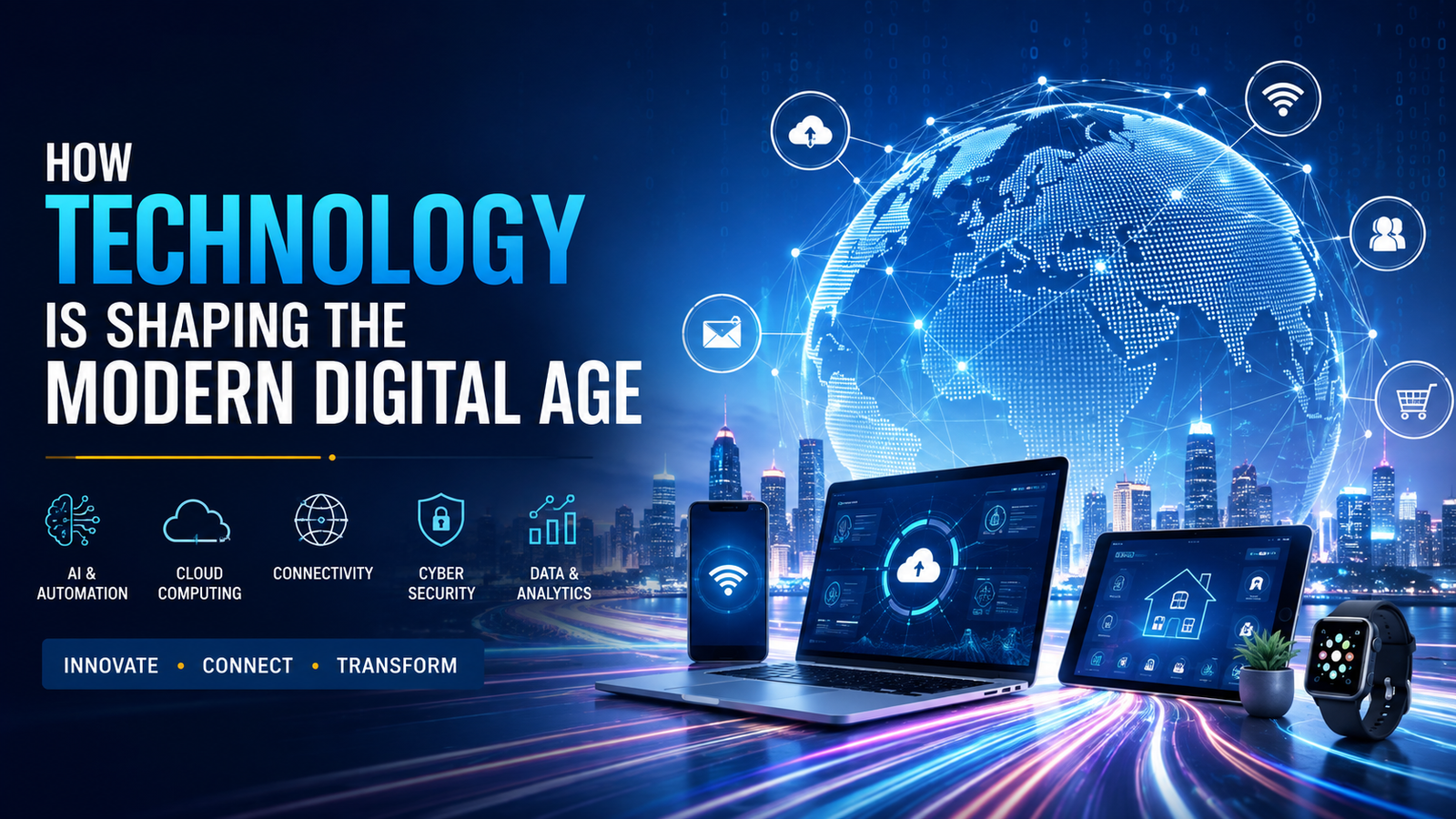
Technology has become one of the most important parts of modern life. From smartphones and computers to artificial intelligence, cloud computing, digital payments, and smart devices, technology continues to change how people communicate, work, learn, shop, and entertain themselves. The modern digital age is built around fast access to information and connected digital systems that make many everyday activities easier and more efficient.
The rapid development of technology has created new opportunities for individuals, businesses, educational institutions, and governments. At the same time, it has introduced challenges related to privacy, cybersecurity, digital dependence, and responsible use. Understanding how technology is shaping the modern digital age can help people make better decisions and take advantage of the benefits of digital innovation.
The Growth of Technology in Everyday Life
Technology has changed dramatically over the past few decades. Earlier, people depended heavily on physical documents, landline telephones, television, newspapers, and face-to-face communication. Today, many of these activities can be completed through a single smartphone or computer.
Smartphones allow people to communicate, browse the internet, watch videos, access educational resources, manage finances, use maps, and connect with businesses from almost anywhere. Mobile applications have made many services more convenient, while high-speed internet has made digital communication faster than ever.
Technology has also become an important part of homes. Smart televisions, security cameras, voice assistants, connected appliances, and other smart devices allow users to control and monitor different aspects of their homes digitally. These developments show how deeply technology has become connected with everyday routines.
Technology and Communication
Communication is one of the areas most affected by modern technology. People can now communicate instantly through messaging applications, email, social media, video calls, and online collaboration platforms.
Businesses can communicate with customers across different countries without requiring physical meetings. Families and friends can stay connected even when they live far apart. Students can communicate with teachers and classmates through digital platforms, while remote workers can collaborate with colleagues from different locations.
Social media has also transformed how information spreads. People can share opinions, photos, videos, news, and other content within seconds. However, users should also understand that not every piece of information found online is accurate. Developing good digital literacy and checking reliable sources are important parts of responsible technology use.
Technology in Education
Education has experienced major changes because of digital technology. Students can access online courses, digital libraries, educational videos, interactive learning platforms, and virtual classrooms. This provides learners with more opportunities to study beyond traditional classrooms.
Teachers can use presentations, educational software, online quizzes, videos, and digital resources to make lessons more engaging. Students can also research topics quickly and collaborate on assignments using cloud-based tools.
Online education has made learning more accessible for people who may not be able to attend traditional institutions. However, digital learning also requires discipline, reliable internet access, and the ability to distinguish trustworthy educational information from misleading content.
Technology does not replace the importance of teachers. Instead, it can support teachers by providing additional resources and tools that make learning more flexible and interactive.
Technology and Modern Businesses
Technology plays a major role in the success of modern businesses. Companies use computers, websites, mobile applications, cloud platforms, customer relationship systems, digital marketing tools, and data analytics to manage their operations.
Small businesses can now reach customers through websites and social media without needing a large physical presence. E-commerce platforms allow businesses to sell products and services to customers in different regions.
Digital marketing has also changed how companies promote their products. Search engine optimization, social media marketing, email marketing, online advertising, and content marketing help businesses connect with specific audiences.
Technology can also improve productivity. Automated systems can handle repetitive tasks, while digital communication tools allow employees to collaborate more efficiently. Businesses that use technology effectively can often respond to customers faster and make decisions using useful data.
Artificial Intelligence and Automation
Artificial intelligence is one of the most significant technological developments of the modern digital age. AI systems can analyze information, identify patterns, generate content, answer questions, assist with customer service, and support many professional tasks.
Automation is also changing workplaces. Repetitive processes can increasingly be handled by software and machines, allowing employees to spend more time on tasks that require creativity, communication, judgment, and problem-solving.
AI can provide valuable support in areas such as education, business, software development, research, healthcare administration, and customer service. However, responsible use is essential. AI-generated information should be reviewed for accuracy, and people should understand that technology can make mistakes.
The growing use of AI also highlights the importance of developing new skills. Digital literacy, critical thinking, creativity, communication, and adaptability are becoming increasingly valuable in the modern workplace.
Technology and Healthcare
Modern healthcare has benefited significantly from digital innovation. Electronic health records help healthcare organizations manage information more efficiently, while digital communication systems can improve coordination between healthcare professionals.
Telemedicine allows patients to communicate with healthcare providers remotely in situations where an in-person visit may not be necessary. Wearable devices can also help users monitor general information such as activity levels, heart rate, and sleep patterns.
Technology has also supported medical research and the development of advanced diagnostic and treatment tools. Data analysis can help researchers study large amounts of information and identify useful patterns.
Although technology can improve healthcare services, sensitive information must be protected carefully. Privacy, security, and appropriate professional oversight remain essential.
Technology and Financial Services
The financial sector has been transformed by digital technology. Online banking, mobile banking applications, digital wallets, contactless payments, and electronic transfers allow people to manage money without visiting a bank for every transaction.
Digital payments can make shopping and money transfers faster and more convenient. Businesses can also use online payment systems to accept customers from different locations.
However, greater digital access also creates cybersecurity risks. Users should protect their accounts with strong passwords, enable available security features, avoid suspicious links, and never share sensitive account information with unknown people.
Financial technology can provide convenience, but responsible digital habits are necessary to keep personal and financial information secure.
Technology and Entertainment
Entertainment has also changed dramatically. People can stream movies, listen to music, play games, watch educational videos, and follow live events through internet-connected devices.
Traditional entertainment methods have not disappeared completely, but digital platforms have given consumers more control over what they watch or listen to and when they access it.
Gaming has developed into a major digital entertainment industry, offering experiences across computers, consoles, smartphones, and other devices. Online communities also allow players and viewers to connect with people around the world.
At the same time, excessive screen time can affect daily routines. Maintaining a healthy balance between digital entertainment and offline activities is important.
Cloud Computing and Digital Storage
Cloud computing has become another major part of the modern digital world. Instead of storing everything on a single computer, individuals and businesses can use online services to store files, access applications, and collaborate on documents.
Cloud technology allows users to access information from multiple devices when they have appropriate internet access. Businesses can also use cloud services to support remote teams and manage digital operations.
Cloud storage can be convenient, but users should still consider account security, privacy settings, backups, and service reliability. Important information should be managed carefully regardless of where it is stored.
Cybersecurity and Digital Privacy
As technology becomes more important, cybersecurity becomes equally important. Cyberattacks, scams, phishing attempts, malware, and data breaches can affect individuals and organizations.
People can improve their digital security by using strong and unique passwords, enabling multi-factor authentication, keeping software updated, and being careful with unexpected messages and links.
Digital privacy is another important concern. Websites, applications, and online services may collect information about users. Understanding privacy policies and reviewing account settings can help people make more informed decisions about their personal information.
Businesses also have a responsibility to protect customer data and use information responsibly. Trust is essential in the digital economy, and poor data protection can have serious consequences.
The Impact of Technology on Jobs
Technology is changing the nature of work. Remote working, digital collaboration, automation, and online business platforms have created new ways to earn an income and build careers.
Many jobs now require some level of digital knowledge. Employees may need to use communication software, spreadsheets, project management systems, websites, databases, or specialized applications.
Some traditional tasks are becoming automated, but technology is also creating new careers in areas such as software development, cybersecurity, digital marketing, data analysis, artificial intelligence, cloud computing, and online content creation.
Continuous learning is therefore becoming increasingly important. People who develop new digital skills can improve their ability to adapt to changes in the workplace.
The Challenges of the Digital Age
Despite its many advantages, technology also creates challenges. Digital addiction, misinformation, privacy concerns, cybercrime, online harassment, and unequal access to technology are important issues.
The digital divide remains a concern because not everyone has the same access to high-speed internet, modern devices, or digital education. Communities and organizations can help reduce this gap by improving digital infrastructure and providing technology education.
Another challenge is misinformation. The speed at which information spreads online means false or misleading content can reach large audiences quickly. Users should evaluate information carefully and consider reliable sources before accepting or sharing it.
The Future of Technology
The future of technology is likely to bring even more changes. Artificial intelligence, automation, smart devices, cloud computing, advanced communication networks, and other innovations will continue developing.
Businesses and individuals will need to adapt as new tools become available. Education systems may increasingly focus on digital skills, while workplaces may combine human expertise with intelligent technologies.
The most successful approach is not simply to adopt every new technology but to understand how a technology can solve real problems. Responsible innovation should focus on usefulness, security, accessibility, and positive outcomes.
See Also:Best App to Get Car Insurance Online in 2026
FAQs
1. What is the role of technology in the modern digital era?
Technology helps people communicate, work, learn, shop, access services, and manage information more efficiently. It has become an essential part of modern digital life.
2. How is technology changing everyday life?
Technology makes everyday tasks more convenient through smartphones, online banking, digital payments, smart devices, online shopping, entertainment platforms, and communication applications.
3. How does technology benefit businesses?
Technology helps businesses improve productivity, communicate with customers, manage information, promote products online, automate repetitive tasks, and reach customers in different locations.
4. What is the impact of technology on education?
Technology provides students and teachers with online courses, digital libraries, educational videos, virtual classrooms, and interactive learning tools, making education more flexible and accessible.
5. How is artificial intelligence changing the digital world?
Artificial intelligence can analyze information, automate repetitive tasks, support decision-making, assist customers, and help people complete many digital tasks more efficiently.
6. What are the disadvantages of modern technology?
Some challenges include cybersecurity threats, privacy concerns, misinformation, excessive screen time, digital dependence, and unequal access to digital resources.
7. Why is cybersecurity important in the digital age?
Cybersecurity helps protect personal information, financial accounts, business data, and digital systems from unauthorized access, scams, malware, and other online threats.
8. What is the future of technology?
The future of technology is expected to include continued growth in artificial intelligence, automation, cloud computing, smart devices, digital communication, and other emerging technologies.
9. Why are digital skills important today?
Digital skills help people use computers, smartphones, online services, communication platforms, and workplace technologies effectively. These skills are increasingly valuable in education and employment.
10. How can people use technology responsibly?
People can use technology responsibly by protecting their accounts, checking information before sharing it, respecting privacy, keeping software updated, managing screen time, and learning about online security.
Conclusion
Technology is playing a central role in shaping the modern digital age. It has transformed communication, education, business, healthcare, finance, entertainment, and employment. Digital tools have made many activities faster and more convenient while creating new opportunities for learning, entrepreneurship, and global collaboration.
However, technology also brings responsibilities. Cybersecurity, privacy, misinformation, digital balance, and equal access must remain important considerations. People need to develop digital skills and use technology thoughtfully rather than depending on it without understanding its risks.
As technology continues to evolve, its impact on society will grow. The future will depend not only on how advanced technology becomes but also on how responsibly people use it. By combining innovation with digital awareness, education, security, and responsible decision-making, society can make the most of technology while reducing its potential disadvantages.